
Many parents and educators struggle with an important question:
How much screen time is okay for preschoolers, and is book time still necessary?
While screens have become part of modern learning, research in early childhood development consistently shows that book reading habits play a more powerful role in building strong cognitive and language foundations during the preschool years.Understanding the difference between screen time vs book time for preschoolers can help parents and schools make smarter learning choices.
Why Screen Time Attracts Preschoolers
Screens are designed to capture attention. Bright colours, movement, music, and instant feedback make digital content highly appealing to young children.
In moderation, educational screen time for preschoolers can:
- Introduce basic concepts
- Support visual recognition
However, most screen interactions are passive, meaning the child watches more than they actively think or respond. For developing brains, passive learning has clear limitations.
Why Book Time Is Crucial for Early Childhood Development
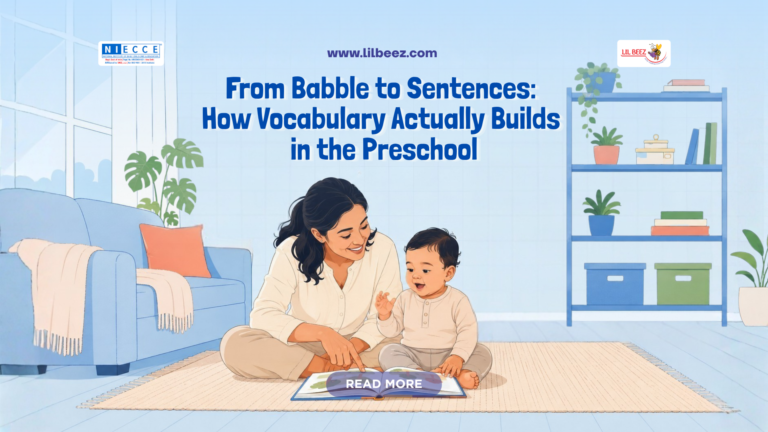
When preschoolers engage with books, the learning process becomes active and multi-sensory. Children:
- Turn pages
- Point at pictures
- Ask questions
- Repeat words
- Imagine stories
This active engagement is why experts strongly emphasize daily reading habits for preschoolers.
Key Benefits of Book Reading for Preschoolers
1. Stronger Language Development
Regular reading significantly improves vocabulary, sentence formation, and listening skills.
2. Better Attention Span
Unlike fast-moving screens, books train children to focus for longer periods which is critical for school readiness skill.
3. Improved Imagination and Creativity
Books encourage children to visualize scenes in their minds, strengthening creative thinking.
4. Emotional and Social Growth
Storybooks help children understand feelings, empathy, and real-world situations.
5. School Readiness and Early Literacy
Children exposed to books early show stronger reading and writing readiness in formal schooling.
Recommended Screen Time Limits for Preschoolers
Early childhood experts and pediatric guidelines generally suggest:
- Under 2 years: Minimal to no screen exposure
- Ages 2–5 years: Up to 1 hour of high-quality, supervised screen time per day
- Daily book time: Strongly encouraged without strict limits
The key is not just limiting screens but prioritizing interactive learning experiences.
Finding the Right Balance Between Screen Time and Book Time
The goal is not to completely eliminate screens but to create a healthy learning environment.
Practical Tips for Parents and Teachers
- Make book reading a daily routine
- Use screens intentionally, not as default entertainment
- Choose age-appropriate preschool learning books
- Encourage children to handle physical books
- Create a distraction-free reading corner
- Read together to build bonding and comprehension
When book time becomes enjoyable, children naturally reduce unnecessary screen dependence.
How Lil Beez Encourages Meaningful Book Time
At Lil Beez, every preschool book is thoughtfully designed to support early learning, engagement, and school readiness. With vibrant visuals, structured progression, and child-friendly formats, Lil Beez books transform reading into an active learning experience.
For preschoolers, the goal is not just exposure to information — but building curiosity, confidence, and strong learning habits.
Final Thought
When comparing screen time vs book time for preschoolers, the evidence is clear: screens can support learning in moderation, but books remain essential for deep, lasting development.
In the early years, the simple habit of holding a book can shape language, focus, imagination, and future academic success.
Prioritize book time today — and build lifelong learners tomorrow.